The Honest Beginner Wildlife Photography Kit I Would Buy Today If I Was Starting Over

Beginner wildlife photography kit | Canon beginner safari | Sigma 150-600 beginner | Wildlife photography gear under $2000

Every "beginner kit" guide on the internet has an agenda. Sponsored links, affiliate commissions, or the subtle prestige of recommending professional-grade equipment that signals the author's own standards. I am going to try to avoid all of that and give you the honest answer.
I shoot Canon and Sigma. This guide reflects that experience. I am not going to recommend equipment I have not used personally, and I am not going to recommend equipment that is beyond the realistic budget of someone starting out.
The Constraint
This guide assumes a total budget of approximately $2,000 USD for the core kit. This is not an arbitrary figure, it represents a realistic starting budget for someone who is serious about wildlife photography but not yet committed to the professional level of investment that serious wildlife photography can eventually require.
At this budget, you can assemble a kit that is genuinely capable of producing excellent wildlife images. What you are not getting at this budget is the best autofocus system, the best low-light performance, or the best optical quality available. You are getting tools that will produce excellent results in the hands of a photographer who understands them.
The Core Recommendation
Camera body: Canon EOS R10 - approximately $900
The R10 is Canon's entry-level APS-C mirrorless body, and it punches significantly above its price point for wildlife photography. It has Animal Eye Detection autofocus, the tracking system that maintains focus on animal eyes through movement and partial occlusion. It shoots at up to 23 frames per second in electronic shutter mode. It has subject detection that works across birds and animals.
The APS-C sensor provides a 1.6x crop factor, which effectively extends the reach of your lenses, a 600mm lens behaves like a 960mm equivalent. For wildlife photography, where reach is a constant challenge, this crop factor is a genuine advantage at this price point.
What you give up relative to a full-frame body: dynamic range at high ISO, and overall image quality in low light. These are real limitations. They are manageable for a photographer who is learning and are improvements that will be meaningful when you are ready to invest further.
Lens: Sigma 150-600mm f/5-6.3 Contemporary - approximately $1,000
This is the lens I use as my primary wildlife telephoto, and for a beginner it is an excellent starting point. The 150-600mm zoom range covers the vast majority of safari situations. The optical quality at this price point is genuinely impressive.
At f/6.3 on the long end, you will need to be mindful of shutter speed and ISO in low light. On the R10 with Animal Eye Detection, the autofocus performs well at this aperture. The lens has its own optical stabilisation which, combined with the R10's in-body stabilisation, gives meaningful stability at longer shutter speeds.
Total: approximately $1,900
This leaves approximately $100 of the budget for a memory card (at minimum a 128GB UHS-II card - do not buy the cheapest card you can find; fast write speeds matter for burst shooting) and a beanbag (which you can make yourself with a fabric bag and dried lentils, or purchase a purpose-made model for $30 to $50).
What Comes Next
The kit above will serve you well for your first several safaris and through the learning curve of wildlife photography. When you are ready to invest further, the sequence I would recommend:
Second priority (after the core kit): A second camera body, any Canon R-series body compatible with your lenses. Dual-body shooting unlocks the 70-200mm focal range without lens changes.
Third priority: The Canon RF 70-200mm f/2.8 or the Sigma 70-200mm f/2.8 equivalent, for low-light work and environmental portraits.
Fourth priority (eventually): A full-frame Canon R-series body, the R5 or R6 Mark II, when high-ISO low-light performance becomes the limiting factor in your photography. By the time this is the limiting factor, you will have made enough images to know what you are upgrading toward.
The Most Important Investment
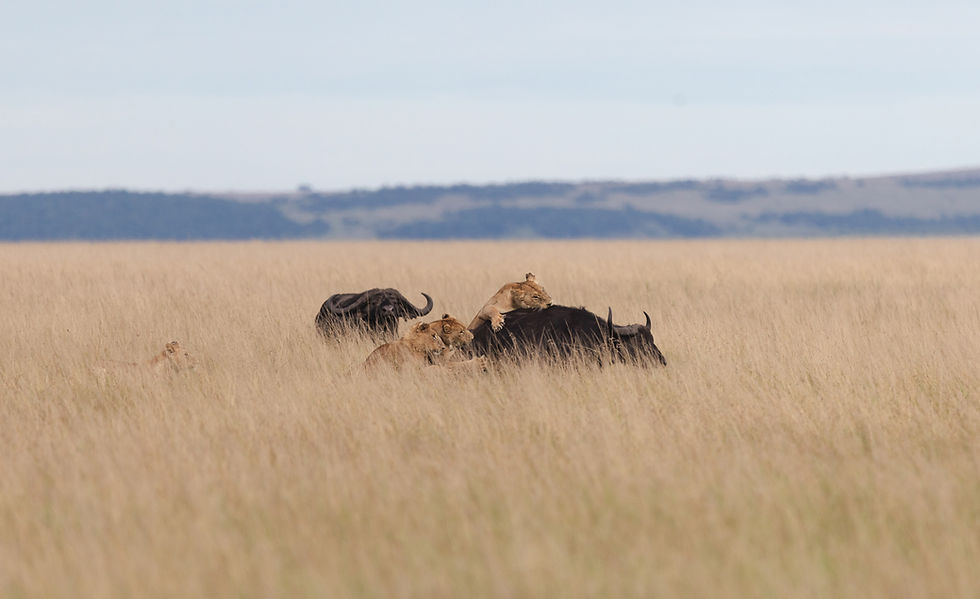
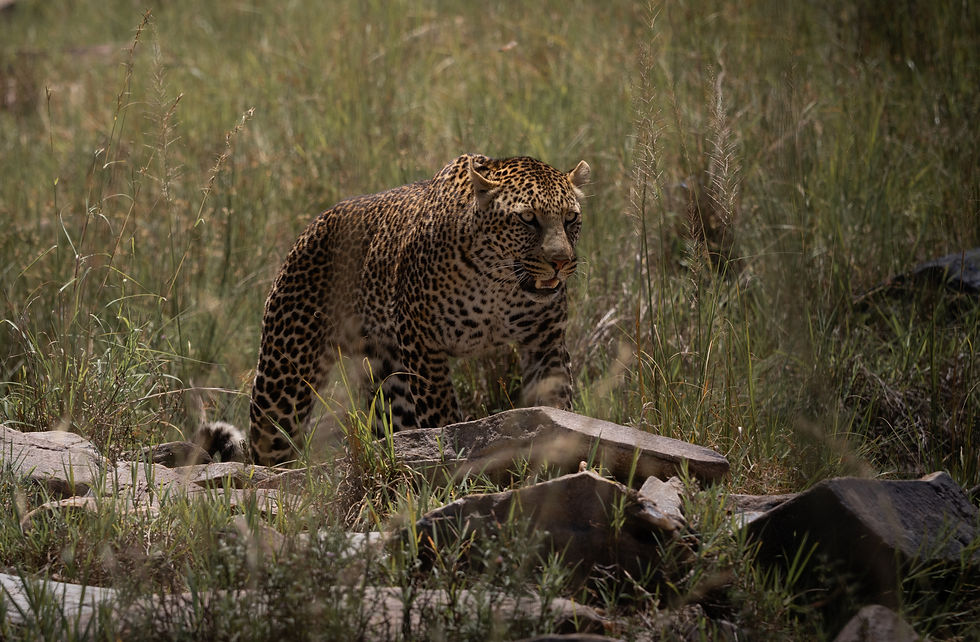
None of the above matters as much as learning animal behaviour. The kit listed above is fully capable of producing images that win photography competitions, get published in magazines, and communicate the extraordinary reality of African wildlife. What it cannot do is anticipate a hunt, read a leopard's pre-stalk body language, or understand that the apparently sleeping lion is about to move.
Knowledge is the investment that pays compound interest indefinitely. A photographer with a $2,000 kit and deep behavioural knowledge will outperform a photographer with a $20,000 kit and no behavioural knowledge every time.
For the knowledge investment, my Wildlife Photography Beginners Guide and Animal Behaviour Field Notes are the starting points I would recommend alongside the equipment above.


Comments