Why Predators Fail Most of Their Hunts And What That Means for Your Photography

Predator hunt success rates | Lion hunting behaviour | Cheetah hunting | Wild dog hunting | Wildlife photography tips
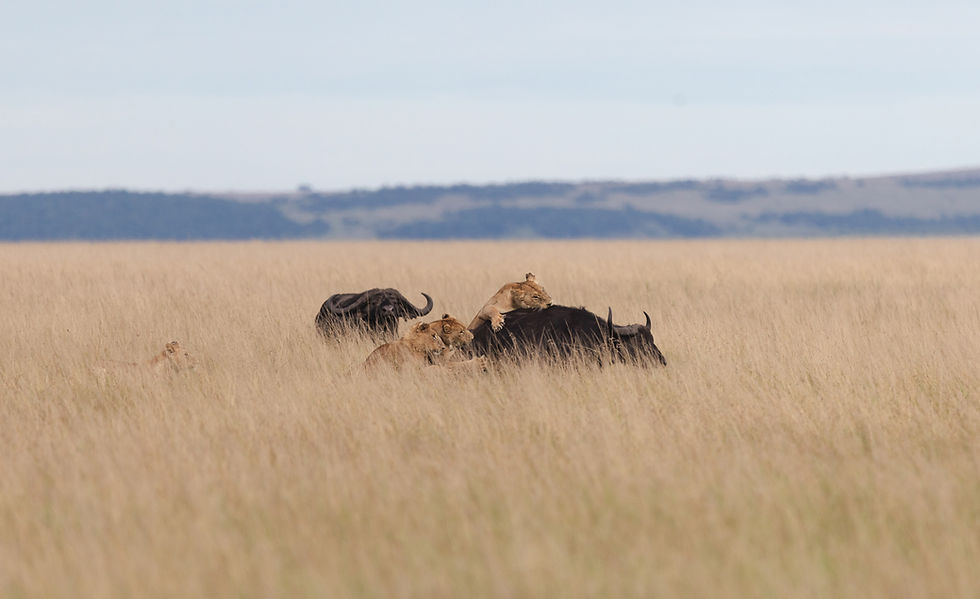
The African predator hunt is one of the most sought-after events in wildlife photography. It is also, statistically, an event that ends in failure more often than success, and knowing why changes both how you understand what you are watching and how you position yourself photographically.
The figures are instructive, and they vary considerably between species in ways that reveal fundamental differences in hunting strategy and ecology.
Hunt Success Rates: The Actual Numbers
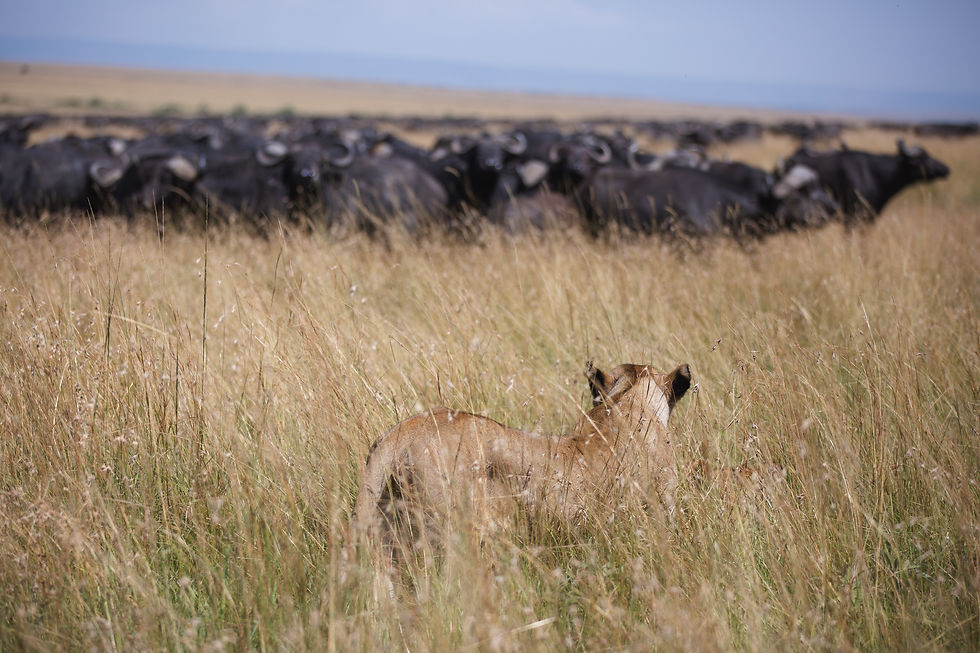
Lions succeed on roughly 17 to 25 percent of hunts, with significant variation depending on prey type, terrain, number of hunters, and conditions. Hunts by solitary lions are less successful than coordinated group hunts. Night hunts are more successful than day hunts. Hunts in long grass or complex terrain where approach is concealed are more successful than hunts in open ground. The iconic, dramatic daylight lion hunt that safari guests hope to witness is among the least likely to succeed.
Cheetahs succeed on between 40 and 58 percent of hunts, considerably higher than lions, which reflects their specialised pursuit strategy. Cheetahs do not rely on concealed ambush. They rely on speed in open ground, and their selection of prey is precise: they choose individuals that are smaller, younger, or otherwise compromised. This selective targeting accounts for much of their higher success rate. However, cheetahs frequently lose kills to lions, leopards, and hyenas after a successful hunt, which means their net caloric gain per hunt attempt is lower than the success rate alone suggests.
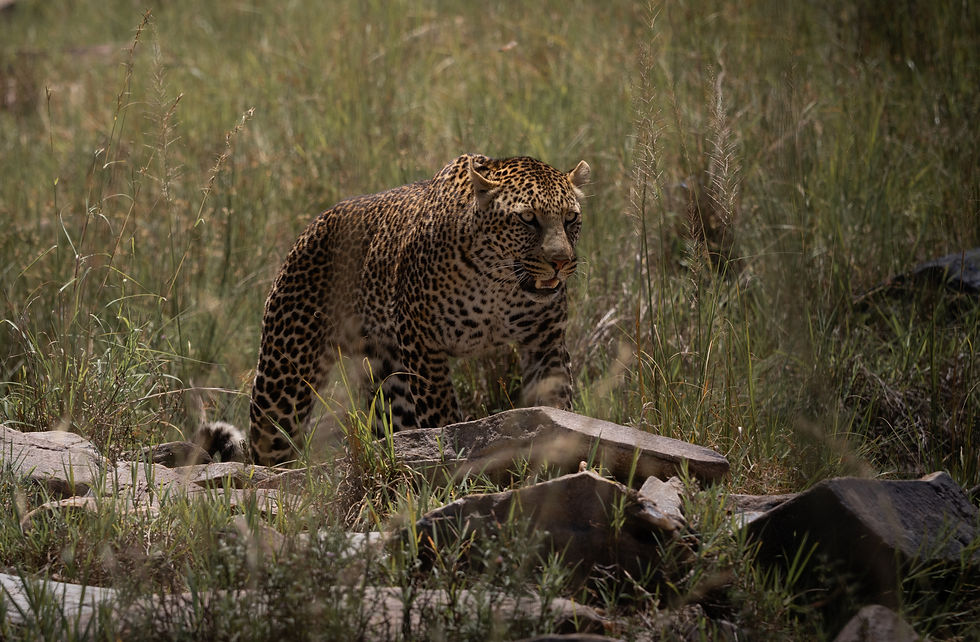
Leopards succeed on roughly 38 to 50 percent of hunts, reflecting a combination of patience, concealment, and the precision of a stalk-and-ambush strategy. Leopards take a wider prey size range than cheetahs and in more varied habitat, which introduces more variability into the figures across different ecosystems.
African wild dogs have the highest hunt success rate of any large African predator, succeeding on approximately 70 to 85 percent of their hunts. This extraordinary success rate reflects a cooperative hunting strategy refined over millions of years: coordinated chasing, pack members taking relay positions to intercept fleeing prey, and a sustained high-speed pursuit that exhausts prey over distances of several kilometres. Wild dogs almost never abandon a chase once initiated. Their stamina, not their speed, is their primary weapon.
Spotted hyenas hunting cooperatively succeed on roughly 70 to 80 percent of their hunts on medium-sized prey, comparable to wild dogs. Solitary hyena hunts are considerably less successful.

Why Such High Failure Rates?
The evolutionary puzzle is why lions, the most powerful predators on the savanna, succeed only once in every four or five attempts.
The answer lies in the co-evolutionary arms race between predators and prey. Every generation of prey that survives because of alertness, speed, or agility passes those traits to offspring. Every generation of predators that succeeds through better strategy, cooperation, or concealment passes those advantages on. The result, across millions of years, is a system in approximate equilibrium, prey animals good enough at detection and escape to survive most encounters, predators efficient enough to secure sufficient calories to reproduce.
A lion that succeeded on 80 percent of its hunts would rapidly exhaust the local prey population. The current failure rate reflects the calibration of a system that sustains both predator and prey populations over the long term.
The Implication for Photography: Fail Better
Understanding hunt success rates changes the emotional register of watching a failed hunt.
A failed lion hunt is not a disappointment. It is the expected outcome, and it is the outcome that keeps the prey populations healthy enough to sustain the lion. A failed cheetah hunt where the prey escapes by a metre, with the cheetah pulling up exhausted, is not a near-miss, it is a story about the precision of the prey animal's escape strategy as much as about the predator's pursuit.
Failed hunts are often more photographically interesting than successful ones. The sequence of a stalk, a sprint, an evasion, and a predator standing exhausted in long grass tells a complete story. A successful kill, photographically, often ends suddenly in ways that are difficult to capture cleanly. The extended drama of a failed hunt, the chase, the evasion, the consequence, gives you more time, more compositional possibilities, and more behavioural content.
Stay through the failure. The most common mistake photographers make after a failed hunt is losing interest and moving on. Stay. The predator's post-hunt behaviour, recovery, self-grooming, the resumption of scanning for the next opportunity, is worth documenting. The prey animal's flight, the resumption of grazing at distance, the return of calm to the disturbed area, these are the resolution of the story.
Watch for secondary hunts. A predator that has failed once, particularly a cheetah that is fit and relatively fresh, will often hunt again within the same session. The first failure is intelligence-gathering as well as an attempt, the predator has seen the prey flee in a specific direction, used a specific evasion technique, reached a specific speed. Subsequent attempts sometimes succeed precisely because of what the predator learned.
Wild dog hunts demand specific preparation. Wild dog hunts are extended pursuits that can cover several kilometres at high speed. This is fundamentally different from the ambush-and-sprint model of cats, and requires different photographic preparation: expect movement, expect direction changes, expect a fast conclusion. High shutter speed (1/2500s minimum), continuous AF, and wide enough framing to keep the pack in shot across changing terrain are all essential.
Conservation Context
Wild dog hunt success rates matter beyond photography. African wild dogs are critically endangered, with a global population estimated at fewer than 7,000 individuals. Their extraordinary cooperative hunting success rate is part of what makes pack integrity so important to their survival, a disrupted pack is a less effective hunting unit, and in an ecosystem where wild dogs also face pressure from lions and hyenas, pack cohesion is a genuine survival factor.
Photographing wild dogs, any encounter with them, carries conservation weight. Supporting lodges and conservancies that have resident wild dog packs, and advocating for vehicle conduct that does not disrupt pack movements or denning behaviour, is a direct contribution to a species whose survival is genuinely uncertain.
For a comprehensive guide to predator behaviour across East Africa's major species, including hunting strategies, social dynamics, and photographic guidance for each species and behavioural context, my Animal Behaviour Field Notes guide covers each predator in depth alongside the prey species and inter-species interactions that make the ecosystem legible.


Comments